I'm still alive, but I'm fading fast (to sleep, I mean, not fading fast toward death). I walked from dawn until dusk today, surviving the route's meanest hill, and I'm now at the Jeokgyo-jang Motel. I'm here for two days, so I'll write tomorrow about how today went. Meanwhile, enjoy the promised pics and captions.  |
| We're back to 20% exaggeration of distances. Sigh... |
 |
| The path would sometimes veer away from the river. |
 |
| I guess I was the first to leave today. My room-key card sits alone in the drop. |
 |
| persimmons on the tree |
 |
| cosmos |
 |
| garlic, a second-round crop |
 |
| farm equipment |
 |
| hazy sun in a hazy morning sky |
 |
| the Nakdong from a bridge |
 |
| gravesite before my huge hill |
 |
| the majestic view from the top of the huge hill |
 |
| another hill graffito saying "Fuck" (misspelled) |
PHOTO ESSAY
 |
| Tissue box advertising massages (cough... "massages"). Sometimes, these places are innocently legitimate. |
 |
Danger Guy shows the dangers of leaning and falling. Meanwhile, the large-font printed notice is in both Korean and English, so there's no translation needed. |
 |
| one of those key-drop boxes for people who are leaving |
 |
| no checkout needed—just drop your key in the box and go (that's my room key in there) |
Why I like motels: no calling ahead; just pay for your room at the front desk, go to your room, chill out, shower, do whatever, and no one will bother you, even if you're there for more than one night (most motels lack "do not disturb" signs).
 |
| the automated, 24/7 cafe across the rain-kissed street |
 |
| heading out |
 |
| a resto specializing in pork and soondae (Korean blood sausage) soup and rice |
Soondae stew is one of my favorite Korean stews. Korean blood sausage, unlike the French boudin (I've never tried the Louisiana style), contains cellophane noodles and/or rice along with blood inside of a sausage skin that's usually a natural casing. If I didn't tell you it was blood sausage, you'd probably love it. That said, don't knock it until you've tried it. It's very, very good.
 |
| Gyodong Jjambbong is the name of the Chinese place down the street from the motel. |
Jjambbong is a kind of spicy, salty seafood "stew" with some veggies and chewy noodles. It's a major player on the Korean-style Chinese-food menu. I love the broth of jjambbong, and I'll eat all of the stew's solids just so I can attack the broth with a huge glop of rice—almost like a porridge but not quite. People look at me funny when I eat all of a soup or stew's solids, then go after the broth: many Koreans rather wastefully stop eating their soups when they've finished with the solids, leaving a half-full bowl of broth that will only get tossed out. The broth is good, people! Drink it!
 |
| the entrance to NeNe Chicken in the early morning (5:17 a.m.) |
Note the presence of the delivery guy's moped in front of the store.
 |
| A traditional shwimteo swims into view. |
 |
| Jinhae Banjeom, a Korean-style Chinese place. I'll have to visit this the next time I'm here, |
A banjeom is literally a spot or point (like a dot or a blot). Many Chinese restos in Korea have banjeom as part of their name ("We're the XYZ Spot."), so banjeom is practically synonymous with "Chinese joint." The resto above appears to be fairly large-sized; I wonder what kind of business it does and how good its food is. A lot of Chinese places suck: the jjajang-myeon and jjambbong are flavorless; the tangsuyuk and gganpoonggi are squishy instead of crunchy because the cook doesn't know how to keep sauced batter crunchy. Most Chinese food in Korea is barely passable; some is frankly terrible, but occasionally, some restos will produce utterly sublime food, as you'll see in a few days when I reach west Daegu. The Chinese place in Namji, close to my motel, is one of the good ones. Not stellar, perhaps, but much better than mediocre. The food has heart. The place pictured above, though... I've never been there, so I have questions. Is it big and thriving because it's good, or is it now mediocre, riding on its past glory while it continues to decline? Only the Shadow knows.
 |
| Looking sadly over at the outer edges of Namji as I pass by; this town always treats me well. |
 |
| "Namji Central Church"—no idea of the denomination |
I looked up the church's denomination: it's Daehan Christian Presbyterian Church (PCK, i.e., Presbyterian Church of Korea). Daehan = literally "Great Korea" in this context. Learn more here. When you're on the page, just right-click and select "Translate to English" for the English translation. That should be easy enough.
 |
| still playing around with ISO and shutter speed |
Photographing bright objects at night with my cell phone has always been a chore. Everything comes out looking like a vague, white blur. Letters on signs are indistinct, and the full moon might as well look like the sun. I started learning some photography basics earlier this year, which is how I learned the fundamental concept of the "exposure triangle," exposure referring to how the camera's photosensitive surface is exposed to light. The three vertices of the triangle are ISO, shutter speed, and aperture (also called the f-stop). ISO is the brute light exposure; shutter speed is the speed at which the camera's shutter (a kind of iris/pupil-like part) opens and closes; aperture refers to how wide the "iris" is at its widest for your shot. A related concept, affected by all of this, is depth of field, which has to do with what's in and out of focus.
On my cell phone, a Samsung Galaxy S21, I can adjust the shutter speed and the ISO, but not the f-stop, which is fixed. Of course, when I reduce the ISO and increase the shutter speed, I'm letting less light into the camera, so everything around the bright thing I'm photographing—like glowing letters on a church—gets concomitantly darker. But the glowing letters at least become legible. So in adjusting these vertices of the exposure triangle, there are trade-offs. I'm still learning how to balance them, so please pardon me while my twilight/nighttime/low-light photos continue to suck.
 |
| a place that sells or rents out farm equipment |
 |
| Greenhouse? A lone light in the darkness. |
 |
| Say it with me: Jupiter, Procyon, Sirius (top to bottom) |
 |
| This is the Gyeseong Creek (계성천/Gyeseong-cheon). |
 |
| Sangdaepo Village (상대포마을/Sangdaepo-maeul) |
 |
| Ignore how the sign says "Riv." in English. It's a creek. |
Interesting trivia: In Korean, the generic term for a creek is hacheon/하천, but hacheon can be even more generically applied to watercourses of any size, including rivers. I've seen signs about river flooding that refer to the Nakdong as a hacheon instead of a gang/강, the usual term for a river. This may be why cheon/천, in the sign above, has been translated as "Riv." But trust me—if you saw the watercourse in the daytime, you'd agree it's what Amurrican country folk would call a crick.
 |
| It had rained during the night. I guess I'd just missed it. Lucky me. |
 |
| quiet village |
 |
| not the sun—an electric light |
 |
| a slight uphill |
 |
| "Watch out for wild animals." |
 |
| The arrow pointing straight ahead says, in green, Hapcheon/Uiryeong. we're going that way. |
 |
| Assuming that's a letter "j" and not a letter "ch" up top, this is Jeongsa-ri, Jeongsa Village. |
 |
| still following the straight-ahead arrow to Hapcheon/Euiryeong |
 |
| A lot of houses have solar panels. Solar has marketed itself well in South Korea, which likes its alternative energy. |
 |
| old-school house with spanking-new roof |
 |
| I stopped and sat at this bus stop to readjust my shoes and socks, and just to take a breather. 6:26 a.m. |
 |
| Maejeon Village (Maejeon-maeul/매전마을) |
 |
If I'm not mistaken, the left-hand sign is pointing to Lotus Temple (Yeonhwa-sa/연화사). A yeonhwa/연화 is a lotus (yeon/연) flower (hwa/화), also often called a yeon-ggot/연꽃, ggot/꽃 being the pure-Korean word for flower. A Sino-Korean word for temple is sa/사. But this is what is called a bound particle, i.e., it can't exist by itself. You can never say, "Honey, I'm stopping by the sa before I go to work." The particle sa, being bound, has to be attached to something (e.g., a name, like Yeonhwa-sa or Bulguk-sa or Haein-sa). The unbound, pure-Korean way to say "temple" is jeol/절. So you can say, generically, "Honey, I'm stopping by the jeol before I go to work." Bound particles are the bread and butter of the Korean language, where they a-bound. And there are simply too many to list here. |
 |
| Trump would be proud of all the walls. |
 |
Village marker: Gwandong Village (Gwandong-maeul/관동마을). The brown sign with the cartoon lady says something like, "Food Healing Shed/Storehouse." The words food and healing are written in hangeulized English: you can just sound them out. The word for shed/storehouse is 곳간/gotgan, a pure-Korean term. |
 |
| I guess a few power lines come together here. |
 |
| I'd love to know what these buildings are all really for. On the trail, I'm a curious monkey. |
 |
| more tomato-shaped persimmons, looking dewy or rained-on |
 |
| There are old people who track up and down steep paths like this. Imagine a lifetime of that. |
 |
| I'm reminded of a seawall. |
 |
| gettin' foggy... like my brain |
 |
| The gloom seems apropos given the old, slumped nature of the buildings. |
 |
| more old-school architecture (almost certainly not a residence given the glass front doors) |
 |
| the harvest, visible in the murk |
 |
| I can imagine huge, tentacled, Lovecraftian beasts quietly but ponderously crossing the road. |
 |
| when the gate splits the pig |
 |
| That's got to be pooling from the rain. Paddies aren't normally filled with water in the fall: planting is in the spring. |
 |
| unharvested |
 |
| a spray of cosmos (hey, Mom) |
I'll probably mention this several times because I'm senile, but Mom died of brain cancer (glioblastoma multiforme, the most common and aggressive form of brain cancer, killing 1 in 10,000 Americans every year) on January 6, 2010. Click the sidebar link for Kevin's Walk (2008) to learn more. I don't, however, think that the photos for that blog exist anymore. At the time, I had housed all of my photos on a service called Photobucket; I quit Photobucket when it got glitchy in 2016, and I've made little effort to find and salvage my photos from that time period. On my main blog (link also on the sidebar), almost all of my images from before mid-2016 are gone (I have found and reuploaded some images). Still—check the main blog's archives; find a random post from before mid-2016 and see for yourself. Almost nada. I think my pre-2016 images are, in fact, stored somewhere on a hard drive, but the drive itself has become outdated and might not be able to yield the data it contains.
Anyway, before I digress too far, my point is that cosmos flowers remind me of Mom; they were her favorite flower, and they remind me of her every time I see them. A fanciful part of my brain would like to think that these flowers were given the duty of quietly watching over me on Mom's behalf... or seeing them is a bit like seeing Mom in spirit. Superstitious, I know, but it's a comforting thought. I have a lot of regrets about how I related to my mom for years, so these little blossoms evoke an avalanche of mixed feelings.
 |
| white cosmos |
I grew up pronouncing the name of these flowers as "kohss-mohss" because that's how Mom, who was Korean, pronounced them (코스모스). At the same time, as a bookwormy nerd, I knew how to pronounce the title of Carl Sagan's popular book Cosmos the standard US-English way ("KAHZ-mohs"), and these two phonetic renderings of cosmos remained separate in my head for years. Only lately have I made the effort to pronounce the flower name the same way I say Sagan's book title.
 |
| slightly purplish/pinkish cosmos |
 |
| marigolds |
 |
| marigold |
 |
| marigolds |
 |
| Coreopsis |
 |
| a house with the sign "Happy Temple"(?)—maybe a fortune-teller's place (they also sometimes use swastikas) |
 |
| Euphorbia marginata, or snow-on-the-mountain |
 |
| Haengunjeong-sa |
 |
| Old-school concrete was never very good; look at the repaired cracks. |
 |
| "International marriage! Lifetime jackpot!" Probably matching Vietnamese women with male Korean farmers. |
 |
| On we go into the mist. |
 |
| This seems like a sturdier build. |
 |
| "Go slowly in front of the village." |
 |
| ready for action |
 |
| cabbage and other things (everywhere is a spot to grow something) |
 |
| poppies? marigolds? orange cosmos? |
 |
| ah—sulphur cosmos |
 |
| I like the repaired wall. It leaps out at me. |
 |
| More things out drying... were it not for rain and morning dew. |
 |
| beans of some sort...? |
 |
| This wall has seen things. |
 |
| distinctive tree and shwimteo |
 |
| closeup, with broom |
 |
| building in the background = a kind of community center |
 |
| Seongsa Village Hall/Community Center |
 |
| forward we march |
 |
| "Watch for frost." |
 |
| "Sharp curve—danger." |
 |
| up, up, up |
 |
| and up some more |
 |
| Sssshhhh. It's still sleeping. |
 |
| wide shot for context |
 |
| The tree. With the benches. A place to stop a bit. |
 |
| Je m'arrête et je me repose un peu. |
 |
| pretentiously looking off into space (note dew collecting on warm skull) |
 |
| hat switched out for bandanna |
 |
| land of the Lovecraftian beasts (and I didn't go that way) |
 |
| garlic, the second-round crop |
 |
| yet more garlic |
 |
| with the mist, this looks like some kind of sex farm |
 |
| "Traffic-accident-prone area" (small font: Changnyeong Police Chief) |
 |
| and more garlic |
 |
| Aji Bus Station (for my geolocator readers), between Namji (behind me) and Gogok (ahead) |
 |
| We plow on. |
 |
| Aji Village (Aji-maeul). |
 |
| parcels of farmland |
 |
| Do you see the dewy spider web? I'm not sure I see a spider. |
 |
| pulling back |
 |
| The mist... it doth persist. |
 |
| another location marker of some kind... plus a spider (the real reason for the pic) |
 |
| when you're so patient that the dew is on you |
 |
| traffic circle coming up |
 |
| spider, unzoomed |
 |
| spider, closer up (I like the dewy, jewel-like webs) |
Dewy webs remind me of the Buddhist image of the Jewel Net of Indra, an image found in the Avatamsaka Sutra (called Hwaeom-gyeong/화엄경 in Sino-Korean—華嚴經, flower-garland-scripture). As a metaphor, the idea is that every node of the cosmos-wide net has a jewel in it, and every facet of every jewel reflects everything around it, which speaks to the interconnected, interpenetrating nature of intercausality, a basal metaphysical concept in Buddhism. With everything being intercausal, you never come to a root, a base, or a substance. Everything that exists does so in terms of every other thing—everything causes and/or relates to everything else. Connections and interconnections. Westerners like to bray out prideful, chest-beating utterances like I'm me, emphasizing their own uniqueness and seemingly monadic nature by virtue of their uniqueness. But who are you, really, Westerner? Are you self-created? Are you saying that, like a god, you need nothing? Do you, like God Himself, enjoy the property of aseity (self-being or self-sufficient, uncaused being)? No: you came from somewhere (a family, community, a country, a network of antecedent causes), and you need things to survive like air, water, food, and care. Without these things, you die—sometimes in mere minutes. You need language and concepts to navigate reality, and you didn't create those things: they already existed when you came into the world. You are, in other words, utterly dependent on the reality around you (and in you, and through you) for your very existence, as fragile and temporary as that existence is. The network of intercausation is what sustains you for now, but another metaphysical principle in Buddhism is that everything is always moving, in process, so nothing is permanent—including you, Mr. I'm me. You're a wave in the ocean, a temporary concrescence, made entirely of ocean water and holding distinctness only for a moment, then you will slough back into the ocean from which you coalesced. And other waves that aren't you will arise, but because those successive waves are also from the ocean, who's to say that some part of you isn't also part of those future waves? There's a sense in which, according to this worldview, "you" will go on. But not as an individualistic monad. Never that.
Whew—all that from seeing a few dewdrops. Yeah, just forget about all of that. It's just noise. And if you're a Westerner worried that I've just attacked the foundations of your individualism, well, first, stop being so insecure because I've done no such thing, and second, rest assured that Buddhists might not phrase things the way Western non-Buddhists do, but they do affirm, in their own way, one's freedom of choice. They just call it making karma. As Western existentialists will affirm, your choices do indeed have consequences. Life is what you make of it.
 |
| curving right |
 |
| peekaboo, farm! |
 |
| I wonder what all of this looks like when everyone is out working. |
 |
| marching through town |
 |
| that traffic circle the sign warned me about |
 |
| ginkgo berries (a.k.a. shitberries according to a Canadian ex-colleague) |
There's a very limited time during which ginkgo berries can be plausibly harvested and made into something comestible. I've never tried ginkgo products, though, so I have no idea how good or bad they are. I can say this, though: I'd much prefer French mirabelles, and fallen ginkgo berries do have a nasty stink. In the big Korean cities, the berries are usually swept away pretty quickly precisely because of that stink.
 |
| Hoang-sa (ho-ang-sa, Hoang Temple) on Gujin Mountain, 1 km thataway |
 |
| I keep expecting to see Mustangs up on cinder blocks, and ol' Clem underneath working on them. |
 |
| Sojae Bridge (Sojae-gyo/소재교) |
 |
| canal/tributary |
 |
| This is Chilgok Creek (Chilgok-cheon/칠곡천). |
 |
| Out in the sticks, you can expect a lot of farm equipment to be tooling slowly down the road. |
 |
"Greetings! This is Gogok village!" Depending on the Chinese, Gogok could mean "Highvalley" (高谷, high + valley), but it's more likely something like 古谷/고곡/gogok, i.e., "old valley." Alas, whenever I try to guess hanja (Sino-Korean characters), my guess is almost always wrong. |
 |
| farm, farm roads, creek, utility poles |
 |
| along the road we go (8:26 a.m.) |
 |
I used to divert that way to that building over yonder, where a grocery store, a Hanaro Mart, used to be located (and it might still be there for all I know). Good place to buy snacks and drinks. But now, before 9 a.m., it's too early, so the place, if it's still there, is closed. |
One of the frustrations of these treks is walking past a tempting place—a shop, a restaurant, a cafe, etc.—but seeing that it's closed. Like Charlie Brown, all I can think is Rats.
 |
| Good fences make good neighbors, I've heard. Are these good fences? |
 |
| But I dare not linger. |
 |
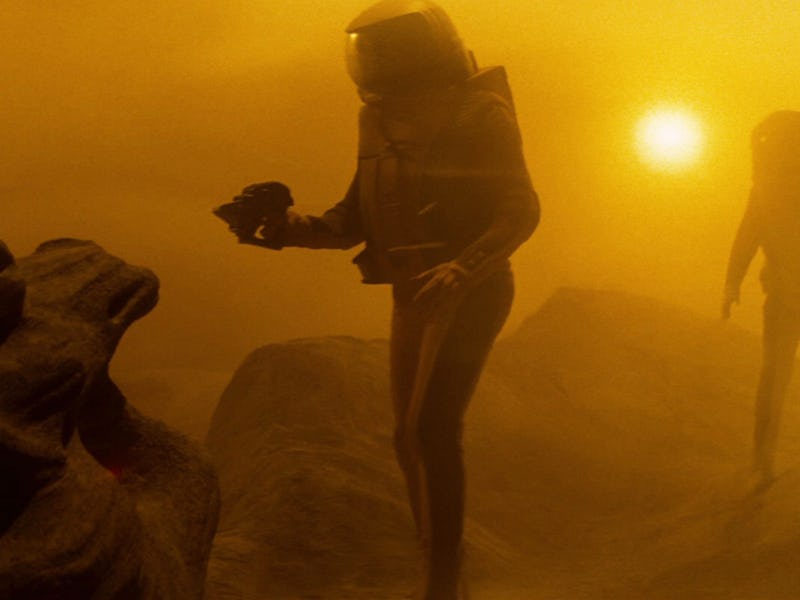
| more of that Ceti Alpha V sun |
 |
| We must be in the sticks when bucket seats (or baby carriers) are banished to sit by the road. |
 |
| straightaway |
 |
| alternating harvested and unharvested earth |
 |
| residence or office? (I love the plastic tank on top) |
 |
| Dilapidation! And it's always the shipping containers. |
 |
| mountains, vague in the distance |
 |
| I could probably walk forever on this maze of access roads. |
 |
| the promised Hoang-sa, Buddhist temple |
 |
| drum and bell of the dharma, to sound and broadcast the law to all sentient beings |
 |
| "Gujin Mountain Hoang Temple" |
 |
| same thing, but in traditional Chinese |
Hanja refers to Chinese characters written in a Korean context and pronounced in the Korean way. Most Korean vocabulary these days (estimates are usually anywhere from 60% to 80%) is derived from Chinese, a bit like how so much vocabulary in European languages comes from Greek and Latin and other antecedents. Korean students are mandated to learn a syllabus of about 1800 characters, which ought to be enough to go to China and navigate most basic and practical Chinese social situations. But linguistic divergence being what it is, some hanja have evolved away from their original Chinese context: there have been changes in meaning, grammar, and pronunciation, so it's not quite right to call hanja just "Chinese characters," hence the careful term "Sino-Korean." In Japan, where there are four writing systems, one is kanji—the Japanese pronunciation of the characters that Koreans know as hanja. In Japan, too, meanings and pronunciations and grammar have evolved and diverged, so again, it's not safe or accurate to say "the Japanese use Chinese characters." That's true only superficially. Kanji is becoming its own thing. In fact, I think the Japanese have invented Chinese-looking characters of their own that also count as kanji. Actual Chinese folks might see these characters and be puzzled.
Here's an example of linguistic divergence: the characters 合氣道 have the same individual meanings in Japanese and Korean, but in Japan, they designate the martial art aikido, while in Korea, they designate the martial art hapkido. The three characters mean harmony-energy-way, often loosely rendered in English as "the way of integrating energy" or some such. But aikido, at least historically, started out as an almost entirely defensive martial art whereas Korean hapkido, which admittedly derives many elements from aikido, is a distinctly different "integrated" martial art with a large "percussive" (striking) syllabus of kicks, punches, open-hand blows, etc., to go along with the locks, holds, chokes, flips, submissions, etc. found in aikido. There are plenty of aikido-vs.-hapkido bouts to be watched on YouTube if you're interested.
Hanja/Kanji is a big part of life in both South Korea and Japan. North Korea, from what I understand, forbade the writing of hanja in 1949, but hanja is still taught in North Korean schools, maybe for reasons of etymological knowledge, the way we train kids for college-entrance exams by having them learn Greek and Latin roots so they can guess at word meanings (like the theological term perichoresis, the term that describes how the Persons of the Trinity relate to each other as a dance [khoreia, like choreography] in the round [peri, like perimeter or pericardial]). Korean newspapers regularly use hanja, often with parenthetical Korean to help people know which character is being referred to. That said, most students these days learn their hanja, then forget it when they no longer need it. Hence all the parenthetical Korean.
The Korean writing system, invented in the 1440s, is called hangeul. It's an alphabet of 24 letters in various combinations. The letters are written using the same left-to-right, up-to-down stroke order used to write Chinese characters, and the letters are often stacked together in blocks to form syllables. The arrangement of the letters in a syllable follows the stroke-order rules: left-to-right, up-to-down. While hangeul can capture a lot of sounds, modern Korean has limits: there are no "f," "v" or "th" or "zh" sounds, and Korean pronunciation follows its own idiosyncratic tendencies (I hesitate to call them "rules"), so rendering foreign words in hangeul is often hilarious.
French is particularly hard to hangeulize since it has so many sounds not found in Korean. Take the French word bonjour, written as 봉주르 in hangeul. That's bong-ju-reu. If you stretch your imagination, you can kind of hear bonjour in there. But Korean doesn't do nasal vowels (like the on in bonjour), so its only solution is to make an ng sound (the Korean letter ieung, or ㅇ), so a syllable like bon becomes bong. The j in French is a lot like the s in the English word measure, i.e., a zh sound, but there's no zh sound in Korean, so the best that hangeul can manage is to replace the zh with a j sound.
Anyway, this is Korea, and you're going to see a lot of hanja on this walk. If you went to Japan, you'd see even more kanji because the Japanese are less hesitant to use it and more rigorous about learning it. Oh, and while this is true to a small degree in Korea, it's much truer in Japan: Many Sino-Japanese characters have totally different pronunciations (and meanings?) depending on context.
Ah, the pleasure and horror of learning an East Asian language. I found French to be a hell of a lot easier. I went into learning Korean with a swelled head, convinced—after having learned French so easily—that I was a hotshot language talent who could just absorb any language. Then the reality of learning Korean hit me over the head, and coupled with my laziness since college, I've never progressed beyond high-intermediate-level Korean. What I know is enough for me to get around and have basic conversations with random folks, but I'll never discuss deep and nuanced philosophical ideas or abstruse notions of politics and history or the finer points of poetry and other literature. I can do most of that in French, where I'm pretty fluent, but in Korean? No way. And now, my brain is too old and shriveled for me to learn much more. I do try, though—in fits and starts.
 |
| the road up to the temple |
And so we move on from the temple.
 |
| open for business |
 |
| Good thing there are so few cars and trucks. |
 |
| Nature takes everything over. |
 |
| neighborhood in the sticks |
 |
| The spray-painted warning says, "Beware of dog. Beware of dog." And there it is: the dawg. |
 |
| up a slight hill |
 |
| See the shrine on the left? |
 |
| I've always been curious about this one. |
 |
| Who or what is it for? |
 |
| a marker of some kind (and orb webs from tiny orb weavers on the gate) |
 |
| Not learning more hanja is one of my major regrets. |
 |
| continuing on and looking over at another farm road |
 |
| 8:52 a.m., and still foggy/misty |
 |
| I do like the tree-lined road, though. |
 |
| Maybe the fog is finally starting to burn off. |
 |
| Are the mountains a bit more visible now? |
 |
| Putt-putt-putt—it's Farmer Joe! Or Farmer Jeong-su! |
 |
| Things do seem to be clearing up at last. |
 |
| graves |
 |
| The first line is something about a student or being a student or being a learner. |
 |
| This seems almost like a Christian-style grave. Commenters—help me out! |
 |
| plot with lame scarecrow off to the side |
 |
| For God's sake. That's as good of a scarecrow as you've got? |
 |
| the crick |
 |
| And we go on. |
 |
| Jabi Temple (Jabi-sa/자비사), part of the Daehan Buddhism Jogye Order (biggest order, I think) |
 |
| As I've written before: swastikas were associated with Indian religion long before Hitler. Keep that in mind. |
 |
| wide shot |
 |
| moseyin' on down the road |
 |
| Just as the prophecy foretold: lots of farm equipment on the road. |
 |
| The day has cleared up, at least for now. |
 |
| Yup, he saw me. Busted. |
 |
(gray marker) "Chilhyeon Village." (wooden sign) "Lacquer Tree Village, Full of the Scent of Happiness." Does anyone else hear that in their head and think Farts of contentment? |
 |
| nonstop agriculture |
 |
| I like the low cloud. |
 |
| The mountain shadow I'm under is its own microclimate. |
 |
| We're about to arrive at a crucial point on this day's walk. |
 |
| where I'm going |
 |
| the road not taken |
I should explain. I normally let Naver Map determine my path every day, and for the past few kilometers out of Namji-eup, I've followed Naver, but not the official Four Rivers (or Nakdong River) path. I think this is because Naver is more concerned with finding bike routes that are shorter and, arguably, safer. The above photo shows the official route that any scrupulous biker should take to keep following the right and true path. I have never once walked along it, but I'm burning with curiosity about it. Is it that much longer of a route to Namji? How's the terrain along that route? Hilly? Flat? A mix? Inquiring minds want to know.
Because I've come this way down from Incheon more often than I've come up from Busan, I normally think of this "path not taken" as the path to Namji-eup. But if I could find the path where it starts closer to Namji, it could easily be the path away from that city. I suspect that it's only a bike path and not near any roads, so it might actually be quieter and perhaps even safer, whatever Naver's soulless "reasoning" might be for routing me the way it does. One day, I'll walk this segment just to satisfy my curiosity, and if it turns out that this path is more pleasant than the road I've always taken up to now, I'll switch over to using this route—the official route.
 |
| But that is neither here nor there. Onward I must go, and this is the official path. |
 |
| clouds, not fog or mist |
 |
| I've apparently gone 113K, and I have 272K to go. |
 |
| the access road below |
 |
| I hope they never develop this land. But in a century or two, if South Korea survives its birth-rate crisis, who knows? |
 |
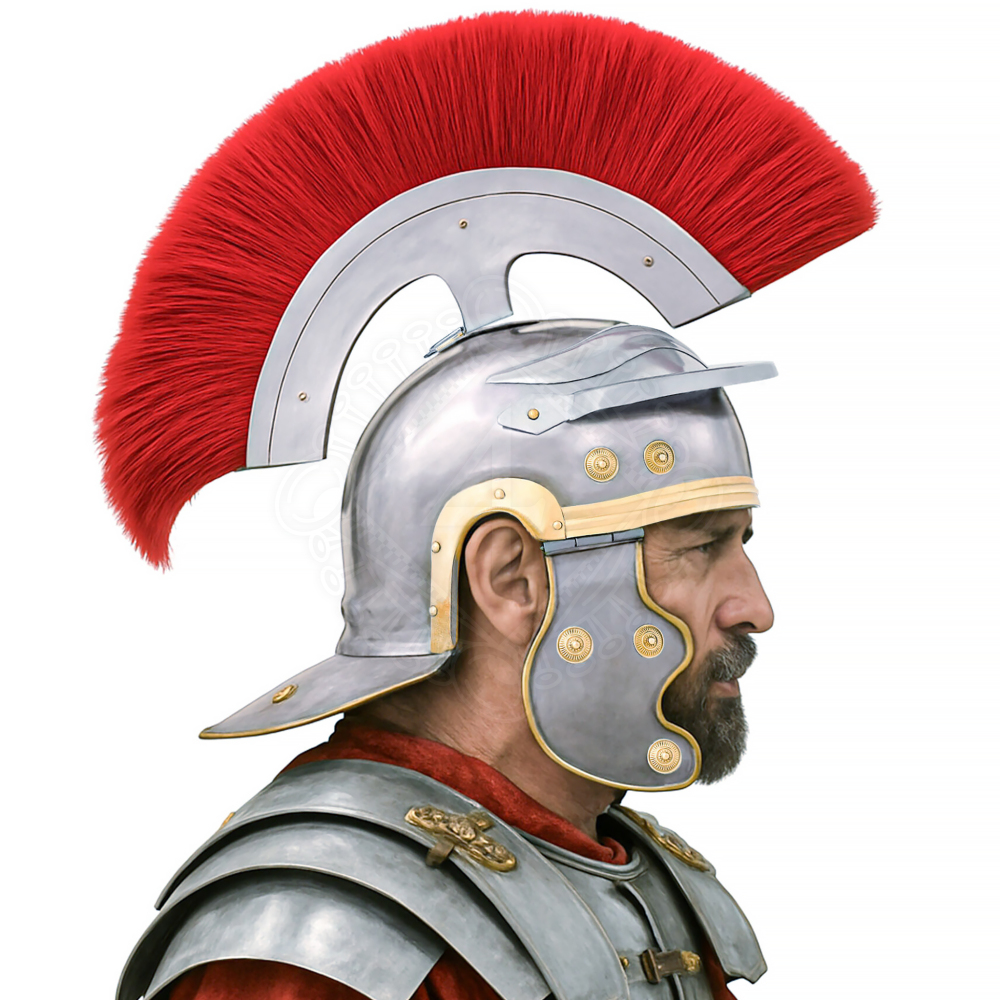
| My head looks as though it's got a Roman soldier's crista-plumed helmet on it. |
 |
| ...but it's just the bandanna, tied on a little bit strangely today. |
 |
| not quite a straightaway |
 |
| Where there are mountains, there are valleys. |
 |
| fall colors |
 |
| But notice how green everything mostly still is. There are a lot of evergreens. |
 |
| See the myo (tumuli) in the distance? |
 |
| zooming in |
Myo/묘 = tumulus/tumuli, burial mounds. These days, with real estate at such a premium in a small, overpopulated country, you need money for such a burial, for a family plot. As I indicated before, that won't be me. Cremate me, then throw my ashes over the side of a boat. No fuss, no muss.
 |
| I guess I walked another kilometer. |
 |
| And we go on. |
 |
| This looks to be a nice, fairly prosperous community. Not much in the way of old buildings. |
 |
| I also see lots of solar panels. |
 |
| It's a few kilometers of straightaway. |
 |
| drainage gate (baesumun/배수문) |
 |
| swingin' left |
 |
| 국토종주 (you know this by now, right? if not, click the sidebar link) |
 |
| 10:06 a.m., and another possible desktop wallpaper |
 |
| Note how the post gets it wrong: 115K ahead and 270K behind? That's backward. |
 |
| The post on the other side seems to be correct. |
 |
| into the distance |
 |
| bunker...? |
 |
| wide shot for context |
 |
| Yet another slug with weird little pebbles on its tail (they all have them... babies?). |
 |
| about to change character again |
 |
| "Steep rise, 17% grade for 30 m." |
 |
| really not that horrible |
 |
| But this might be horrible: greeted by a dog turd—a 3D representation of canine intestines. |
 |
| Straight on we go, with 국토종주 partly covered up. |
 |
| plots, plots and more plots (and what are those veggies?) |
 |
| "Safe speed: 20 kph. Nakdong River bike path. Hapcheon-Changnyeong Dam, 33K." |
Don't confuse that dam with the one we'd passed: Changnyeong-Haman Dam.
 |
| no lack of bounty |
 |
| Korean equivalent of an American farmhouse |
 |
| Is the blurred object a UFO? A soul caught on camera? |
 |
| a glance to the right as I pass |
 |
| What do these buildings house? |
 |
| I'll never know because I never stop to ask around. I'm on a schedule, forced on me by my slow walking speed. |
 |
| I'm guessing there are living things in those cloth-draped buildings. |
 |
| Something cleft the slug in two, leaving its ass for me to contemplate. |
 |
| The drying-out continues. |
 |
| Running out of farm soon (for this part of the path, I mean). |
 |
| I wonder what's going on here. |
 |
| I'm glad I'm not on that rise. |
 |
| I'll be crossing this bridge. |
 |
| Enough signs pointing left for you? |
 |
| another fallen mask |
 |
| Changnyeong County (bottom of the sign: Namji-eup) |
 |
| This is the Bakjin Bridge (Bakjin-gyo/박진교). |
 |
| 810 m long |
 |
| And as I start across... |
 |
| ...an abandoned glove. Of course. |
 |
| looking left |
 |
| looking right |
 |
| drainage facility |
 |
| valley, village, solar panels |
 |
| Now entering Uiryeong County. Specifically, Burim-myeon (a township). My mean hill is coming. |
 |
| Get those last looks in while you can. It's gonna get real in a bit. |
 |
| stairs to mystery |
 |
| up a bit of a hill |
 |
| The alignment of mountain valleys predestines you to a certain amount of daylight every day. |
 |
| another unharvested rice paddy |
 |
| and the "air houses" |
 |
| Okay, more than a bit of a hill. |
 |
| Goats! I've eaten goat meat only once as far as I know. |
 |
| How aaaaaaare you aaaaaaall? |
 |
| They think I speak goat with an accent. |
 |
| We're not at the big hill yet, but we're obviously going up. The rise before the rise. |
 |
| my travel companion, an assassin bug |
 |
| the one stark tree amongst all of that verdure |
 |
| gravesite, way up there |
 |
| zoomed in |
 |
| ZOOMED IN |
 |
| Ah, we're almost at the bottom of the worst hill of the walk. |
 |
| I see an ad for the Jeokgyo-jang Motel (적교장모텔), where I'm eventually headed. |
 |
| Here—see the ad up close. |
 |
| The ill fated swing right and up the hill... but I'll pause first. |
 |
| As I sit, I see another gravesite up that hill. |
 |
| I see other myo, too. Downhill a bit. |
 |
| Vous voyez? |
 |
| one last look |
 |
| I'm not looking forward to this. |
No more delays—after resting and talking with a trio of bikers heading back home to Daegu, I knew it was time to go up the damn hill. As I said, I arrived at a formula: 40 paces (right-left = 1 pace), 15-20 breaths' pause. Somehow, that got me up the slope, even as the slope steepened.
 |
| "Shampoo story"—a mystery as to what this means |
 |
| the overgrown building, slowly being swallowed by Nature |
 |
| not going down that road |
 |
| yet another road not taken |
 |
| a lot of hill left to climb |
 |
| It's easy to look up and despair. Mentally divide the hill into small bites. |
 |
| the ramp leads to a facility |
 |
| Up I go. Sigh... |
 |
| another ramp down that I'll be skipping |
 |
| What manner of factory is this? |
 |
| Hmmm... |
 |
| Hello, tank. |
 |
| no cats on that hot, tin roof |
 |
| another grave |
 |
| stairs to mystery |
 |
| looking down |
 |
| Keep on... keep on... |
 |
| As I near the summit, the path gets steeper. |
 |
| 좋은 태도/joeun taedo = good attitude—a nice, positive sentiment |
 |
| The ensteepening reaches its worst phase. Around 100 m to go. |
 |
| My heart hasn't exploded thus far, thank Cthulhu. |
 |
Wow—from last year and still visible! A guy went up with his big brother. "Everything back in place, truth revealed... went up this place with my big bro. —Kim Dong-min, Kim Dong-gyu, 9/27/24." |
 |
| At the top! I survived. 12:15 p.m. |
 |
| It's a phonetic pun: the English "knock" sounds like the Korean "낙" (nak). |
The expression nakseo/낙서 means graffiti. The green sign below says "Nakseo-myeon," which lends itself to a pun: Graffiti Township, the place I'm entering. And goofy interlinguistic puns involving nak/knock are possible, too. On top of that, in the photo below: note the red booth—a certification center at the summit of this hill. On the blue concrete "wall," we see the pun "In Nakseo, (we/you/they) do graffiti." But really, for me, the most important things about this spot are (1) the splendid view down to the river (which you'll see in a moment), and (2) the benches that I plan to lie on for half an hour after taking some ibuprofen. The simplest things in life—like rest—are often the best things. Especially after a massive, 1.3-ish-kilometer trudge uphill.
 |
| Entering the town/region of Nakseo-myeon. The blue sign invites people to graffiti (낙서, nakseo) on the concrete. |
 |
| Turning around, I see I'm leaving the town/region of Burim-myeon. |
 |
| route map |
 |
| certification center and a garbage bag where I can throw away all of my snot rags |
I spent the entire walk, almost every day, blowing my runny nose nonstop. Lots of tissue to throw away whenever I would find a place to throw out my ever-accumulating garbage.
 |
| gorgeous view below, plus the pavilion (shwimteo) |
 |
| with railing |
 |
| without railing (and note the bridge in the distance—a huge landmark) |
 |
| the victory pic, before I lay down for my nap |
 |
| a similar fellow traveler to the one I'd seen before |
 |
| assassin bug? wheel bug? |
 |
first line: Nakdong River Bike Path
second line: Cloud Ridge(?) Rest Area (Gureum-jae Shwimteo) |
 |
| awkward, thumbless goodbye (why did I do that?) |
 |
| one last, loving look |
 |
| heading downhill now, with relief |
 |
| Huh... That bridge looks a little bigger. Did I use my zoom? |
 |
| I must have. |
 |
| "Absolutely decelerate. Danger—steep slope." Don't do it, Danger Guy! |
 |
| Someone angrily crossed out someone else's "China" (중국/Jungguk/中國) graffito. |
In simplified Chinese, 中國 becomes 中国, which is what you see above.
 |
| "Although I, Lee Joong-seop, am walking, it's difficult." |
Walking in contrast to riding a bike, I guess. And yes, it's difficult. Glad to know it's not just me.
 |
| A son proudly writes about biking the route with his dad on September 29 this year. |
 |
| Wow! We all love Big Mike! |
 |
| Quite the opposite of "Good attitude" is this graffito, which misspells "Fuck" but gets its point across. |
One way to say "fuck" in Korean is 씨발/shi-bal, spelled with a double-S (ㅆ). The above graffito uses only a single S (ㅅ). Either a moron or a foreigner. Or a foreign moron.
 |
| Dwellings in valleys are always charming. I used to stare at such clusters of buildings when I lived in Switzerland. |
 |
| the shwimteo I always pass and never use, whether I'm going up or down |
 |
| "There are fields, Neo. Endless fields." |
 |
| ...and we'll be back on a proper bike path by the river soon enough. |
 |
| But first: more myo. |
 |
| Here we go... and in a few minutes, I'll be handed a fat, juicy persimmon by an old farm wife. |
 |
| By the way: the bridge in the distance is still under construction. |
 |
| ah, tranquility |
How can you not feel blissful and satisfied after that ascent and descent?
 |
| En avant! |
 |
| undeveloped wetland |
 |
| like a sea wall, but for vegetation |
 |
| peek-a-boo! |
 |
| Where's your driver, buddy? |
 |
| On I walk. |
 |
| Awkward, as though I'd interrupted something. |
 |
| shrine |
 |
| Yoolsan Village (Yulsan-maeul/율산마을) |
At about this point, a farmer-driven truck drove up to me, and a woman leaned out, straining to give me a persimmon. I strained back, and we successfully made the handoff. The persimmon was exactly what I needed, and I mentally thanked the farming couple as they drove off in their truck. I also enjoyed spitting the seeds randomly out over the guardrail and onto the undeveloped ground, where I hope at least one seed will eventually turn into a big, healthy persimmon tree.
 |
| about to munch, and not believing my luck |
 |
| Skinny like a wasp but colored like a hornet. AI suggests mud-dauber wasp. |
 |
| spider ass |
 |
| and yet more ass |
 |
| looking back at that shrine |
 |
| mushed glove |
I really need to round up all the gloves I find. Maybe I could sell them as souvenirs.
 |
| continuing inevitably toward that bridge |
 |
| Large things always seem closer than they really are. |
 |
| 22.5 km to Hapcheon-Changnyeong Dam. |
I won't reach the dam today.
 |
| eventually swooping left |
 |
| speaks for itself... and still adding up to 385 km |
 |
| Sometimes, I feel like a low-flying crop duster. |
 |
| Old Man River |
 |
| Whoa, another live one! |
 |
| a nice, big sky |
 |
| The bridge does look a bit bigger finally. |
 |
| I imagine the water would be clean enough to swim in, this far from big cities. |
 |
| farming road, take me home |
 |
| Another pregnant mom dead, and rather dramatically. Bike tire? |
 |
| ...and a dramatically killed snake. I can see its ribs. Anyone hungry? |
 |
| parallel lines, transversals, alternate interior angles |
 |
| myo, myo, myo, all guarding the farmland |
 |
| closer, ever closer |
 |
| This sort of "cable-stayed" bridge seems to be a favored design for many river-spanning bridges in South Korea. |
 |
There—that bench. I did stop and rest a bit before continuing on. Getting to this bridge took a lot longer than I'd thought it would, especially in my reduced capacity. |
 |
| Farmland gives way to... what is that by the bridge? A dump or storage? |
 |
| Too organized to be garbage. Storage, then. |
 |
| 3:28 p.m. |
It's midafternoon, and I won't be arriving until evening. Right around dinnertime, in fact.
 |
| ...and we're finally past this bridge, which has been a fixture since I saw it from that hilltop. |
 |
| I'm guessing that's a drainage facility out yonder. |
 |
| Sure looks like one. |
 |
| Quite a few more kilometers go to. Around ten, I think. |
 |
| Here be cows. |
 |
| ladies |
 |
| Stop staring... you're making me blush. |
 |
| If my friend Mike's rule of thumb is correct, these are more likely milchers than beef cattle. |
 |
| Suddenly, I wanna eat marshmallows. |
 |
| sorry excuse for a tumbleweed |
 |
| Nakdong River Flood-prevention Station |
 |
| always on the right path |
 |
| Go on—lick it. I dare you. |
 |
| picnic/entertainment area |
 |
| For me, an opportunity to throw away more snot rags. |
 |
| another helpful route map |
 |
| a slight downhill |
 |
| hot box: where you keep the unruly prisoners in the summertime |
 |
| a fuller perspective (0.5X zoom) |
 |
| 4:42 p.m. |
 |
| We're gonna lose the sun. |
In mountain valleys, the sun "sets" sooner than it does in mountain-free regions. Valleys have their own microclimates. It's even more pronounced in a place like Switzerland.
 |
| still on course and about to go up a minor hill |
 |
| A bus stop called Gamgok/감곡 (Persimmon Valley?). Naejae ahead; Yeoui behind. |
 |
| another tree-and-shwimteo scenario |
 |
| Gamgok Village (Gamgok-maeul/감곡마을) |
 |
| a procession of images |
 |
| but mostly biking-related |
 |
| not all consistently done in the same artistic style |
 |
| almost up the small hill |
 |
| awesome posture, ma'am |
 |
| ...and down we glide. |
 |
| corralled once again (but no farming couple to give me a persimmon) |
 |
| Still, it's quiet and serene, and there've been no other walkers. |
 |
| mausoleum...? |
 |
| With this photo, you see how much I had zoomed in for the previous photo. |
 |
| 8% grade for this slope (오르막/oreumak = a rise) |
 |
| The other bank is still getting some sunlight. |
 |
| You can see the sky transitioning into sunset mode. |
sunrise = 해돋이/haedodi
sunset = 노을/noeul, 일몰/ilmol
 |
I think that that bridge up ahead signals the border of the little town I'll be stopping in for two nights. 33 kilometers and a huge hill later. (And this isn't even the longest segment.) |
 |
| The frog refused to face me. Hmph. Snob. |
 |
| The last straightaway past some farms, leading into town. |
 |
| The world gets quieter. |
 |
| These made an eerie, ghostly sound as the wind blew across them. I tried to record it, but it didn't come out. |
 |
| I've stopped and sat here on previous walks. Not today. Despite hurting feet, I persuaded myself to move faster. |
 |
| Just trust the arrows. |
 |
| Hapcheon County (Hapcheon-gun/합천군) |
 |
| boardwalkiness leads to bridginess |
 |
| across the bridge |
 |
| over the tributary |
 |
| onto more solid ground |
 |
| la lune |
 |
| I had a choice: I could walk on a road paralleling this path, or I could walk on this path. I chose the latter. |
 |
| Lights are on.. must be getting close to dinnertime. (5:57 p.m.) |
 |
| Final shot of my approach before my phone's battery crapped out. |
When I got to my favorite resto in town, I asked the owner whether it'd be okay to use the wall socket by my table to recharge my phone during dinner. He was fine with that. The owner, like the NeNe Chicken guy at Namji-eup, knows me by sight now, and he remembers my previous visits. He's also a friendly guy who happens to be Buddhist, judging by the Dalma-daesa (Bodhidharma) image he's got on the wall of his place.
And that just about concludes Day 6. I was dead tired by the end of this day, as you see from the terse entry I'd written at the start of this post. I was more energetic the following day. But despite how some parts of today's walk were a slog, it was a beautiful day, and I enjoyed it. Most of all: I didn't die, which was the cherry on top.






No comments:
Post a Comment
READ THIS BEFORE COMMENTING!
All comments are subject to approval before they are published, so they will not appear immediately. Comments should be civil, relevant, and substantive. Anonymous comments are not allowed and will be unceremoniously deleted. For more on my comments policy, please see this entry on my other blog.